
Total landed cost when importing from China: how to calculate it
The supplier quote is only part of your cost. Use one formula for every supplier and divide by sellable units, not ordered units.
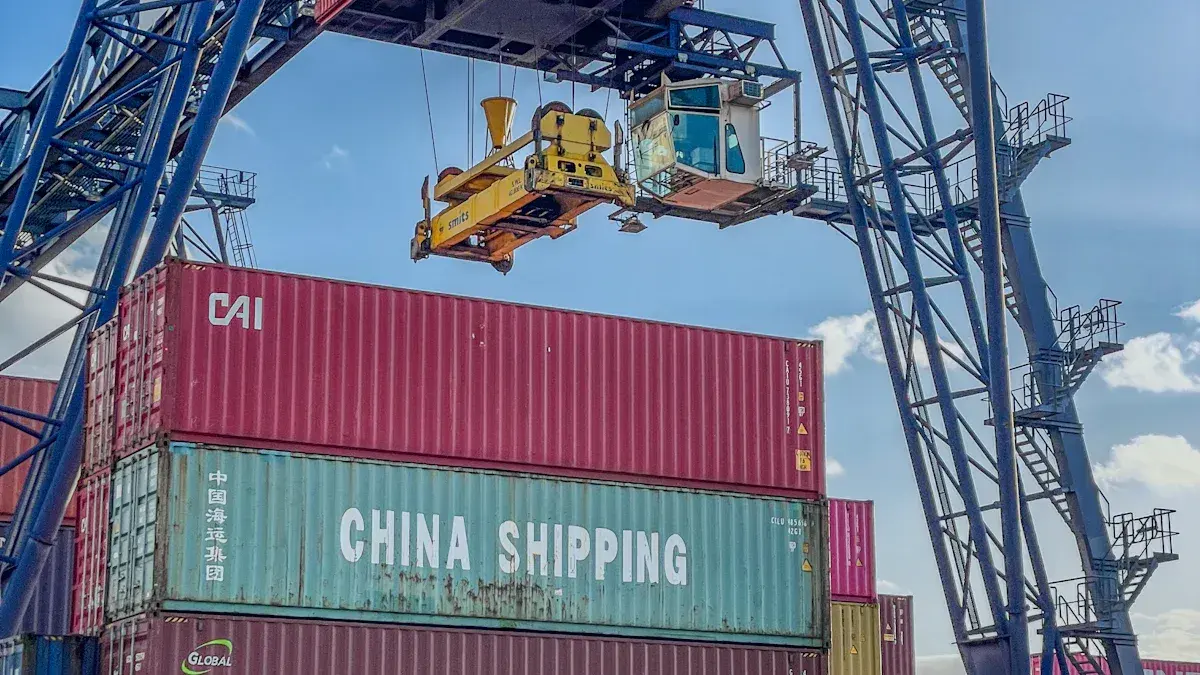
A supplier quote is one slice of what an import costs you. Total landed cost is everything your business carries until the goods are ready at your warehouse, distributor or customer channel. Work it out before you buy: it lets you compare suppliers, set a realistic margin and see whether a route or order size makes sense.
In short
- Use one cost model for every supplier so quotes are comparable.
- Separate known costs, estimates and costs that a broker or logistics provider must confirm.
- Calculate landed cost per shipment and per unit before approving the order.
The formula
Landed cost = product cost + China-side handling + international freight + insurance + duties and taxes + customs-related charges + destination handling + warehouse and local delivery.
The exact parts depend on the product, Incoterm, route and destination. What matters is that each assumption is visible: a quote with just product and freight looks attractive while leaving the biggest risks out.
| Component | Record |
|---|---|
| Product cost | SKU, spec, currency, MOQ, tooling and packaging included |
| China-side handling | Receiving, inspection, repacking, storage, consolidation |
| International freight | Mode, route, chargeable weight, service level |
| Customs and taxes | Classification, documents, duties, taxes, broker charges |
| Destination | Delivery point, local warehouse and last-mile fees |
A three-layer worksheet
- Committed: already agreed in a purchase order, quote or service scope.
- Variable: can change with weight, volume, route, exchange rate, storage days or inspection findings.
- Risk allowance: a clearly labeled buffer for likely exceptions. Don't disguise an estimate as a fixed fee.
Then divide by sellable units, not ordered units. If units may be rejected, damaged, used as samples or held for rework, include that. And keep one version per destination: the same product from the same supplier gives a different landed cost in Spain and in Japan.
Common mistakes
- Comparing an EXW quote with a DDP quote as if they covered the same scope.
- Using a supplier's classification or duty assumption without confirming it independently.
- Forgetting inspection, repacking, storage, consolidation, bank, brokerage or local delivery charges.
- Dividing by ordered units when sellable units will be fewer.
- Reusing an old exchange, freight or tax assumption.
Before approval, ask the supplier or partner which costs are confirmed, which are estimates and which need a customs or tax professional, especially for regulated or category-sensitive products.
A worked example
Invented figures in one currency, only to show the worksheet: you order 1,000 units for 8,000. Inspection and origin handling add 600, international transport and insurance add 1,200, and destination handling and delivery add 500. Subtotal before duties and taxes: 10,300. If your team separately enters an already-calculated duty of 400, the subtotal is 10,700, or 10.70 per ordered unit. (The example doesn't infer a duty rate or customs valuation from the invoice.)
Now suppose only 980 units are sellable because 20 are held for a quality issue. 10,700 ÷ 980 ≈ 10.92 per sellable unit. That's why you should show the denominator as clearly as the freight charge, and keep recoveries, supplier credits and the later release of held stock as separate adjustments.
Keep it separate from the customs calculation
Your worksheet supports buying and margin decisions. Customs valuation and duties follow the rules for your product and destination, so don't assume every operating cost belongs in the customs value, or that a supplier's product code is right. For the EU, start with the European Commission's importing guidance; for Japan, with Japan Customs' import, valuation and tariff resources. Have a specialist validate the inputs for your goods. Ask accounting to show import-tax cash outflows and recoverable amounts in separate columns: recoverability depends on the business and transaction.
Shared charges and closing the loop
For a mixed shipment, document an allocation method: weight or volume for some transport charges, invoice value or another justified driver for others, applied consistently. Don't split everything equally when one bulky SKU takes most of the space. Record currency, rate, quote date and whether each amount is estimated or invoiced, and keep one-time development or tooling in a separate column.
After the goods arrive, compare the estimate with final invoices and accepted stock. Explain each variance (price, quantity, packing, route, unexpected service or quality loss) and give the follow-up to whoever can change the next order. Landed cost becomes an operating record, not a spreadsheet made once.
FAQ
What is the difference between product cost and landed cost?
Product cost is the supplier's price for the goods. Landed cost adds everything needed to get them ready for the destination and for sale.
Should I use one landed-cost model for Spain and Japan?
Use the same structure with separate destination assumptions. Freight, customs, local handling, taxes and delivery conditions may differ.
Does DDP remove every import cost risk?
It can make the scope clearer, but you still need to confirm classification, documents, destination requirements and who is responsible for exceptions.
Keep reading
 Costs & payments
How to pay Chinese suppliers securely
Payment is a control, not just a checkout step. Verify the beneficiary, tie each payment to an approved order and treat bank-detail changes with suspicion.
Read article Costs & payments
China sourcing agent fees: how to read them and compare them
A fee only means something once you know what it covers. Separate service fees, execution fees, supplier pricing and exception costs.
Read article Sourcing & suppliers
How to find a reliable supplier in China (and avoid the usual traps)
A practical checklist to shortlist, verify and test Chinese suppliers before you place your first real order.
Read article